
Ozempic (semaglutide) is widely known as a once-weekly injectable medication developed to help manage type 2 diabetes. Over time, it has also gained attention for its ability to support weight loss by reducing appetite and helping regulate blood sugar levels. In the United States, about 26.5% of adults with diagnosed diabetes were using a GLP-1 injectable medication in 2024, highlighting how central these treatments have become in modern diabetes and weight management.
One such alternative is Rybelsus, the oral tablet form of semaglutide. Its availability has opened the door for people who want the benefits of GLP-1 medications without using needles.
The purpose of this article is to help you understand how Ozempic and Rybelsus compare, what they have in common, how they differ, and when a tablet or injection may be better suited to individual needs and lifestyles.
What is Ozempic and How Does It Work?
Ozempic contains semaglutide, a medication belonging to the GLP-1 receptor agonist class. Pharmacologically, semaglutide mimics a natural hormone called glucagon-like peptide-1 (GLP-1), which plays a key role in appetite regulation and blood sugar control.
Semaglutide works by improving the body’s insulin response, slowing digestion, and reducing appetite, which together help support blood sugar control and reduce food intake. Together, these effects can lead to reduced calorie intake and improved glucose stability factors that support both diabetes management and weight loss.
Ozempic is administered as a once-weekly subcutaneous injection using a prefilled pen. The typical starting dose is 0.25 mg once weekly, which may be increased gradually to a maximum dose of 2 mg weekly. Semaglutide is also marketed under other brand-name medications, such as Wegovy, which is approved for chronic weight management, while Ozempic is approved for the treatment of type 2 diabetes. Both are often prescribed off-label for weight loss when the primary indication is not met.
What is Rybelsus? The Oral Semaglutide Option
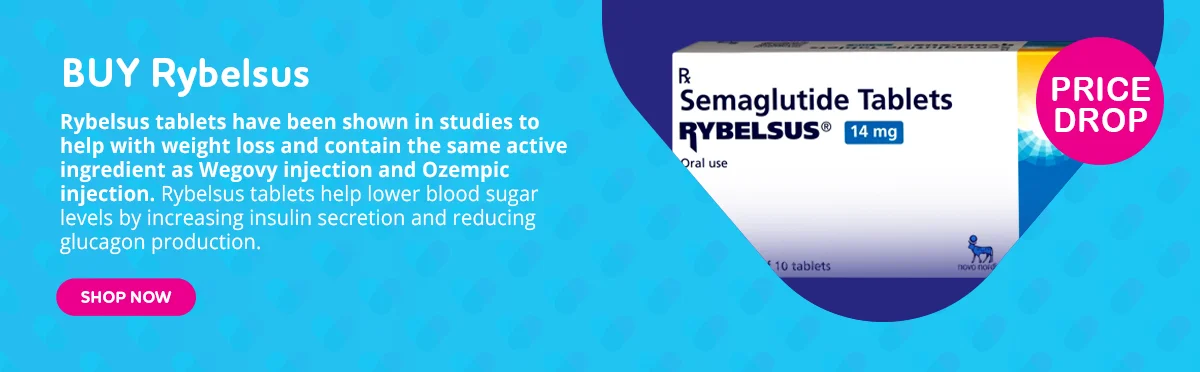
Rybelsus is the oral tablet form of semaglutide, taken once daily. It contains the same active ingredient as Ozempic but uses a specialised absorption enhancer that allows semaglutide to be absorbed through the stomach lining.
Mechanistically, Rybelsus works in the same way as injectable semaglutide, reducing appetite, slowing digestion, and supporting blood sugar regulation. The main difference lies in how the medication enters the body and how consistently it is absorbed.
Rybelsus is often chosen by individuals who prefer tablets, have anxiety around injections, or want a non-injectable option while still accessing GLP-1 therapy.
Ozempic vs. Rybelsus: Key Similarities
| Feature | Ozempic | Rybelsus |
| Active Ingredient | Semaglutide | Semaglutide |
| Therapeutic Class | GLP-1 receptor agonist | GLP-1 receptor agonist |
| Primary Use | Type 2 diabetes; weight loss (off-label) | Type 2 diabetes; weight loss (off-label) |
| Main Action | Appetite control, glucose regulation | Appetite control, glucose regulation |
| Prescription Requirement | Yes | Yes |
Both medications act on the same biological pathway and, when used correctly, can deliver similar clinical benefits. The difference is not what they do, but how they are taken and tolerated.
Key Differences: Injection vs. Tablet
Administration and Convenience
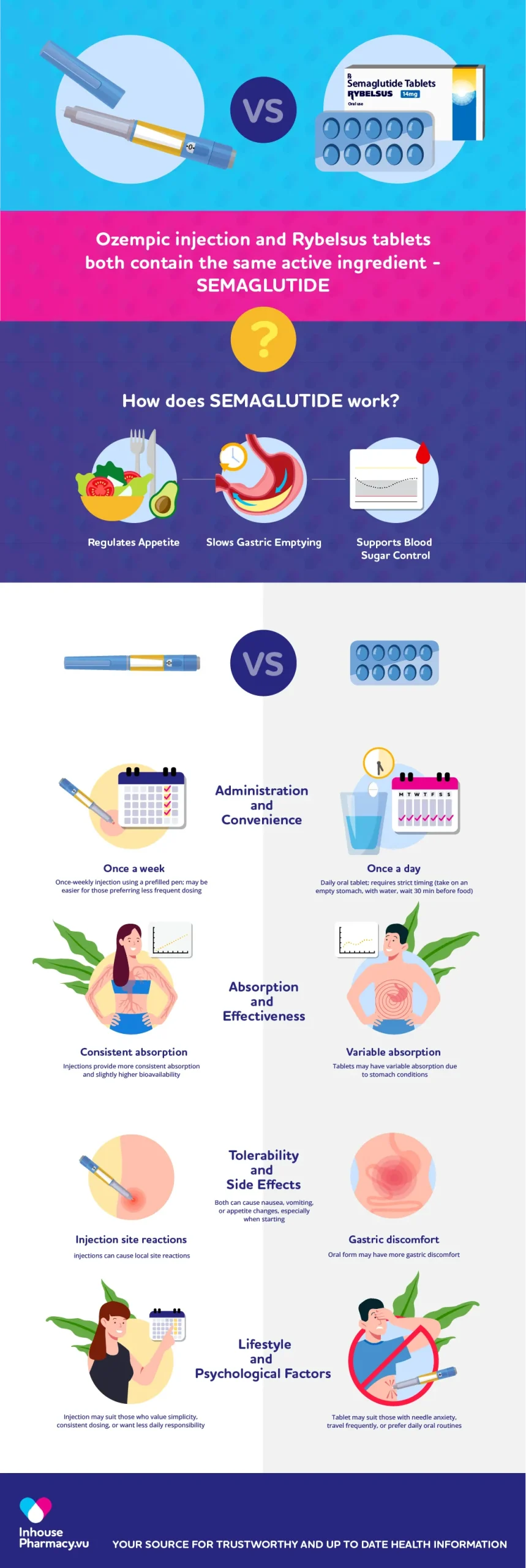
Ozempic is injected once weekly, which appeals to people who prefer minimal dosing and fewer daily routines. Once the injection is done, no further action is required until the following week. Ozempic can be taken at any time of the day, with or without food.
Rybelsus, on the other hand, must be taken daily on an empty stomach, with a small amount of water, followed by a wait of at least 30 minutes before eating, drinking, or taking other medications. This timing is critical for proper absorption of the oral formulation.
Absorption and Effectiveness
Injectable semaglutide offers more consistent absorption, as it bypasses the digestive system entirely. This often results in steadier blood levels of the medication and a more reliable ability to control blood sugar levels.
Oral semaglutide can be affected by stomach conditions, timing errors, or food intake. While clinical trials show comparable efficacy overall in helping patients manage blood sugar levels and achieve weight reduction, some patients experience greater glucose control and significant weight loss with injectable formulations due to more reliable bioavailability.
Tolerability and Side Effects
Both forms may cause nausea, vomiting, reduced appetite, or gastrointestinal discomfort, particularly during dose escalation. Common side effects include stomach pain and decreased appetite.
Rybelsus may cause more stomach-related side effects because it passes directly through the digestive tract. Ozempic may cause mild injection site reactions such as redness or itching at the injection area. Rare but serious side effects have been reported, and patients should seek medical advice if they experience severe or persistent symptoms such as significant abdominal pain or vision changes. Patients should contact their doctor immediately if they experience severe abdominal pain, vision changes, or signs of allergic reactions.
Overall, tolerability varies from person to person, and both medications work best when combined with a healthy diet and regular physical activity.
Lifestyle and Psychological Factors
Rybelsus may suit people who dislike needles, travel frequently, or prefer oral medications as part of a daily routine.
Ozempic may appeal to those who value simplicity, want fewer reminders, or prefer the predictability of weekly dosing with consistent absorption.
When Might You Prefer an Injection Over a Tablet (and Vice Versa)?
| Preference | Ozempic (Injection) | Rybelsus (Tablet) |
| Dosing frequency | Once weekly | Daily |
| Absorption reliability | More predictable | May vary |
| Needle concerns | Not suitable for needle-averse users | Ideal for avoiding injections |
| Stomach sensitivity | Often better tolerated | May cause more GI discomfort |
| Portability | Requires pen storage | Easy to travel with |
For example, a busy professional who does not want a daily medication routine may prefer Ozempic’s once-weekly schedule. Conversely, someone with strong needle anxiety may choose Rybelsus, even with its strict timing requirements.
Other Alternatives in the GLP-1 Family
Beyond Ozempic and Rybelsus, other GLP-1 medications are available. These diabetes drugs offer different dosage forms and administration routes:
- Wegovy (semaglutide): Contains higher-dose semaglutide (up to 2.4 mg weekly) and is specifically FDA approved for chronic weight management rather than diabetes treatment. Administered as a once-weekly subcutaneous injection.
- Saxenda (liraglutide): Another GLP-1 agonist that requires daily injections. Liraglutide has a shorter duration of action compared to semaglutide, which is why daily administration is necessary.
- Mounjaro (tirzepatide): A dual GIP/GLP-1 receptor agonist that activates two hormone pathways. Administered as a once-weekly injection and may offer enhanced blood sugar control and weight loss.
Each option differs in dosing frequency, approval status, and individual suitability.
Important Considerations and Safety
GLP-1 medications should always be used under medical supervision. They are not suitable for everyone.
Contraindications include:
- Personal or family history of medullary thyroid carcinoma
- Multiple endocrine neoplasia syndrome type 2 (MEN2)
- History of severe pancreatitis (use with caution)
Why gradual dose titration matters: Gradual dose escalation is essential to minimize side effects. Starting at a low dose allows the digestive system to adapt to slowed gastric emptying and reduces the likelihood of persistent nausea, vomiting, and treatment discontinuation.
Additional safety considerations:
- Both medications carry a boxed warning regarding thyroid C-cell tumors based on animal studies
- Patients with kidney problems may need closer monitoring, as dehydration from GI side effects can worsen kidney function
- Risk of pancreatitis, though rare, requires awareness of symptoms like severe abdominal pain
Switching between Ozempic and Rybelsus should only be done with professional guidance. A doctor or pharmacist can help assess risks, benefits, and appropriate dosing.
Summary: Choosing What’s Right for You
Ozempic and Rybelsus both contain semaglutide and work to regulate blood sugar while supporting weight management, but they differ in how they are taken and how the body absorbs them. Ozempic’s once-weekly injection offers predictable absorption and minimal daily effort, while Rybelsus provides a daily oral option for those who prefer to avoid needles, though timing and stomach absorption require careful attention.
Neither option is universally superior; the best choice depends on your lifestyle, tolerance, and medical history. Discussing your preferences, side effects, and goals with your healthcare provider can help you choose the medication that fits your routine and supports effective weight and diabetes management.